
Heated towel rails: warmth with a considered finish
Water-heated or electric: choose the comfort, placement and style that suit your bathroom.
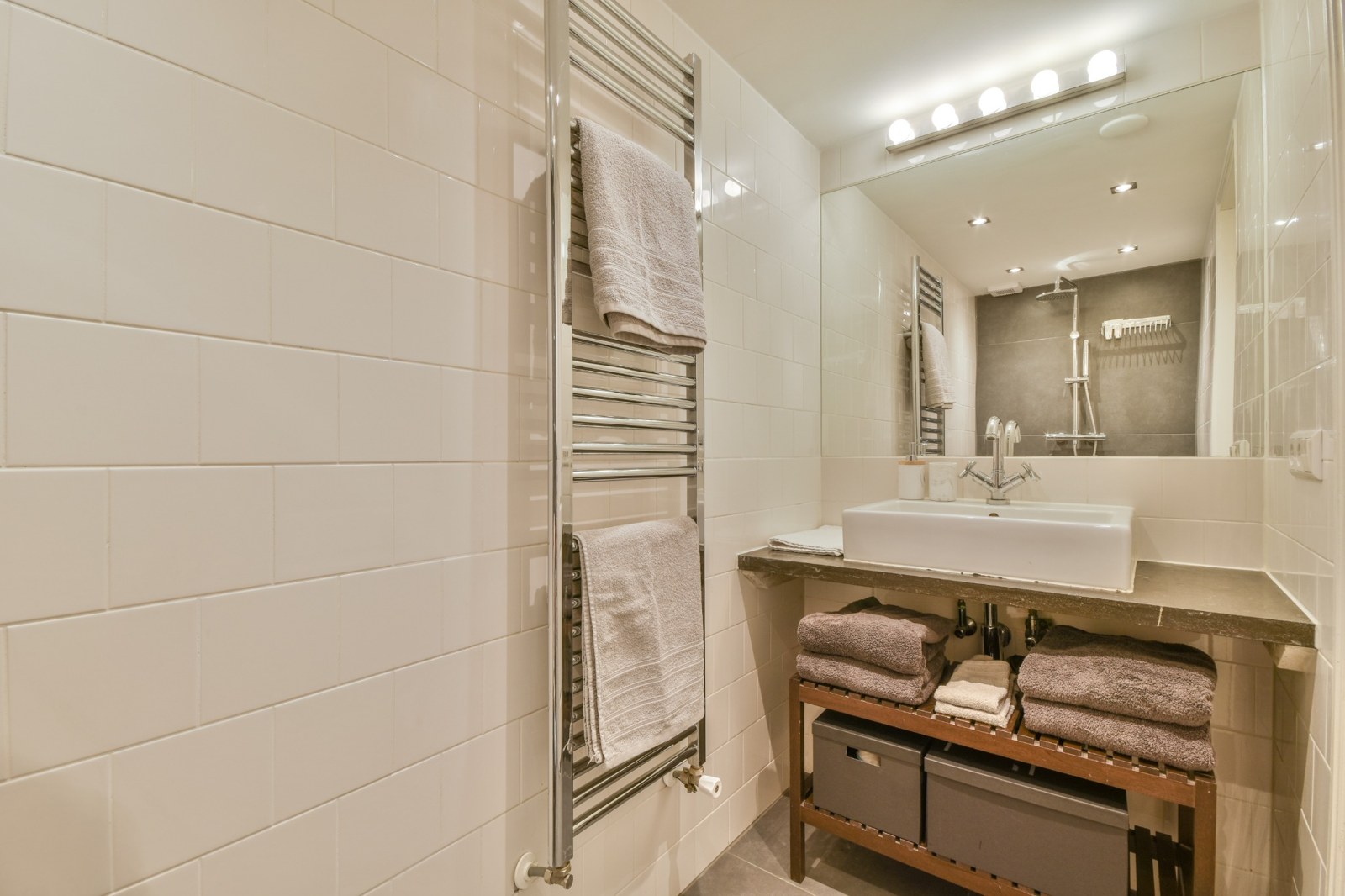
Warm towels, considered design
A heated towel rail can add everyday comfort and become a well-chosen detail in your bathroom. Choose it for the way you want to use it: warming towels, helping them dry or contributing to room heating. These are related, but different, requirements.
Ladder designs
Useful space for hanging towels.
Finishes & details
A detail that complements the room.
Within the bathroom
Position, proportions and access.
Replace an existing bathroom radiator
A water-heated towel rail can often replace an existing radiator and use the existing central-heating pipes. Where suitable, the pipes behind the walls can be extended or rerouted to reach the new connections.
We check the pipe arrangement, condition, valve positions and compatibility with the heating system. Changing connection positions may require opening and making good the wall; this additional work belongs in the renovation proposal.
The rail normally warms when the central-heating circuit supplies heat. If you want warm towels when that heating is off, consider an electric option or a manufacturer-approved dual-fuel model.
An electric towel rail
An electric rail operates independently of the central heating and does not need heating-water pipes. Depending on the model, a timer, temperature control or boost function can fit its use around your routine.
It still needs an appropriate electrical supply and suitable bathroom positioning. A qualified electrician checks the product, connection method, protective devices and location; a nearby socket alone does not establish a suitable installation.
Will it heat the whole bathroom?
Do not assume a towel rail will match the radiator it replaces. We compare its useful heat output with the room’s heat requirement and the actual operating conditions. A decorative rail or towel warmer may provide too little room heat on its own.
For water-heated rails, output depends on water temperatures as well as the product rating. Covering a rail with towels can also change how heat reaches the room. A separate heat source may still be appropriate.
Position it for comfortable use
Choose a position with practical reach from the bath or shower, without compromising safe placement, door clearance or circulation. Check the wall support, brackets and the space needed for valves, controls and cleaning.
Bar spacing and access matter: a beautiful rail should also be easy to hang towels on. Compare the actual dimensions and usable hanging space, rather than choosing only from a photograph.
Running costs and everyday care
Electric consumption depends on rated power, actual heating time and your tariff. Timers can help avoid unnecessary operation, but do not justify a fixed savings promise. Water-heated rails contribute to the demand on the main heating system.
Use the rail only as permitted by its manufacturer, including the types of textiles it can dry. Keep controls clear, allow it to cool before cleaning and use the recommended products to protect the finish. A towel rail does not replace effective bathroom ventilation.
An option within your complete renovation
At Morfohouse, we coordinate the towel rail with plumbing, electrical work, wall finishes and the bathroom’s overall heating needs. We help balance appearance, comfort and cost, explaining any pipe alterations or additional electrical work before installation.