Bathroom ventilation: keeping moisture under control
A well-designed bathroom should feel comfortable as well as look beautiful. Ventilation helps remove humid air after a shower and is part of caring for the finishes.
A practical guide · 3 min read
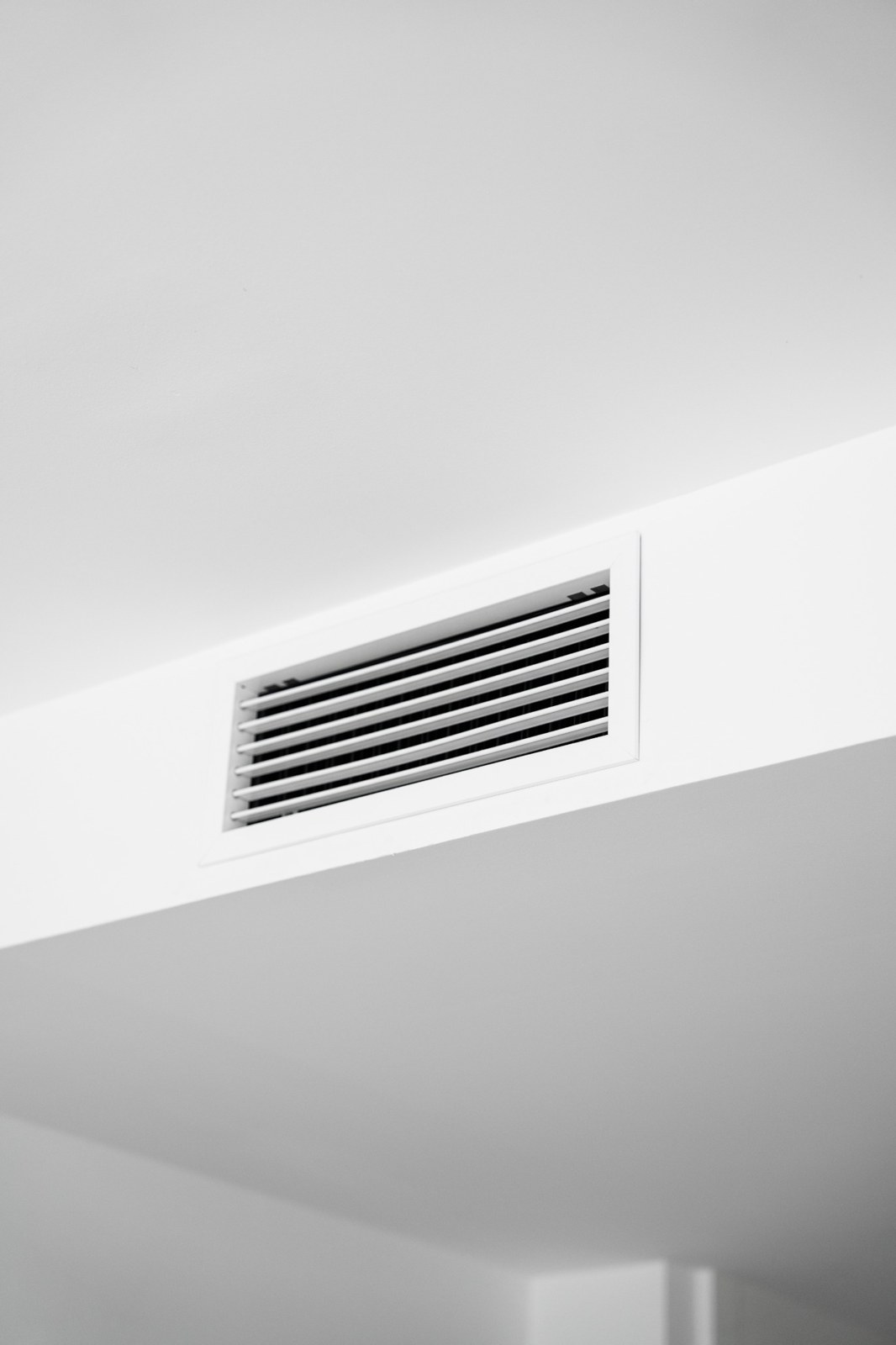
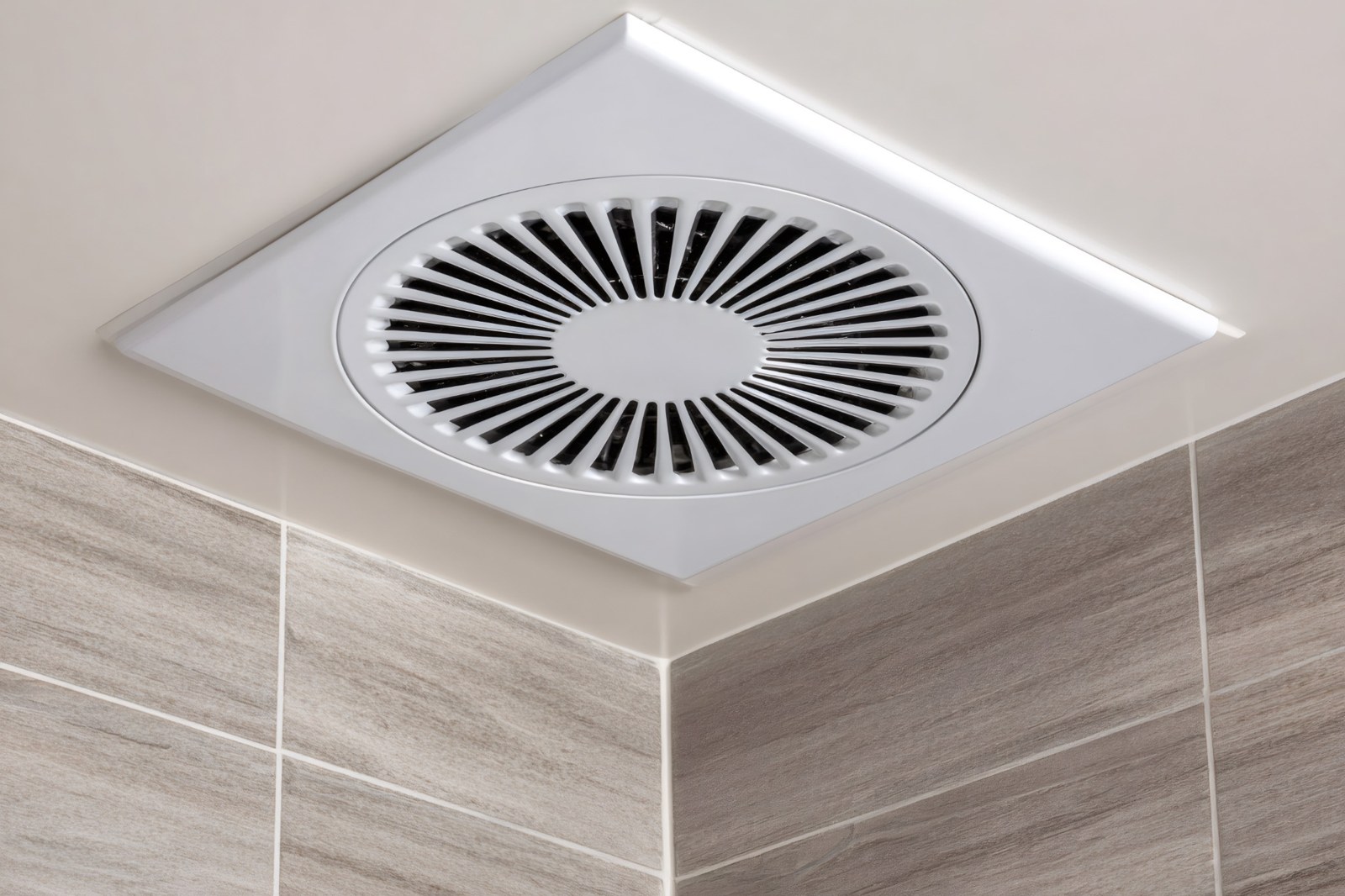
An example of a discreet finish
Start with the system you already have
A bathroom renovation does not automatically need a new extractor or a new hole through an external wall. First, identify how the existing ventilation works and whether it is doing its job.
There may be a local fan, a grille connected to a shared building system or an older ventilation arrangement. A grille does not necessarily mean there is a fan immediately behind it.
What are the signs worth checking?
Condensation that lingers, musty smells or recurring mould are reasons to investigate. They do not prove that the fan is the cause: leaks, cold surfaces, heating and daily use can also contribute.
Check that grilles are clean and unobstructed, the duct connection is intact and any existing fan operates as intended. Where performance is uncertain, airflow measurement can help establish what needs attention.
Extracted air must be replaced. The ventilation design may rely on transfer openings or a suitable gap beneath the bathroom door, supplied by the home’s wider air path.
New doors, sealed gaps or altered partitions can affect that path. Preserve the intended airflow when planning the renovation.
If an extractor needs replacing
Choose a fan for the actual installation, not just the largest airflow number on the box. Duct diameter, length, bends and the discharge route influence its performance.
Noise matters too. Compare sound figures under equivalent conditions, and consider vibration, mounting and the duct route. A timer or humidity control may be useful where appropriate to the system.
A local fan must not be added to a shared duct without checking compatibility. It may interfere with the building’s intended ventilation.
What if there is a window?
Opening a window can help with a temporary build-up of humidity, but it does not establish that the required general ventilation is provided. The answer depends on the building and the applicable requirements.
What do Spanish rules say?
The CTE’s DB HS 3 sets requirements for indoor air quality. Its housing ventilation arrangements provide for air to move from dry rooms towards wet rooms, with extraction from bathrooms.
How those requirements apply to an existing property depends on the scope of the work and the building. A bathroom refresh should not be presented as automatically requiring a complete new ventilation installation.
At Morfohouse, we assess the existing ventilation and recommend suitable improvements, coordinating specialist work where required.
If a new opening or a change to a communal system is proposed, its feasibility, necessary permissions and specialist work should be established before agreeing the scope and price.
The aim is a comfortable bathroom with effective ventilation—and a clear explanation of what your home actually needs.
MORFOHOUSE · GUÍAS
Ventilación del baño: cuidar el ambiente y controlar la humedad
Un buen baño también se nota en el ambiente. La ventilación ayuda a evacuar el aire húmedo de la ducha y forma parte del cuidado de los acabados.
Guía práctica · 3 min de lectura
Ejemplo de acabado discreto
Empieza por el sistema que ya existe
Reformar un baño no implica automáticamente instalar un extractor nuevo ni abrir un hueco en la fachada. Primero hay que identificar cómo funciona la ventilación existente y si cumple su función.
Puede haber un extractor local, una rejilla conectada a un sistema comunitario o una solución de ventilación más antigua. Una rejilla no significa necesariamente que haya un ventilador justo detrás.
¿Qué señales conviene revisar?
La condensación persistente, el olor a humedad o el moho recurrente merecen una revisión. No demuestran por sí solos que el extractor sea la causa: también pueden influir las filtraciones, las superficies frías, la calefacción y el uso diario.
Conviene comprobar que las rejillas estén limpias y libres, que la conexión al conducto esté intacta y que el extractor, si existe, funcione como corresponde. Si hay dudas sobre el rendimiento, medir el caudal puede ayudar a identificar qué necesita atención.
Ventilación en el techo del bañoUna rejilla de acabado discreto
El aire debe poder entrar y salir
El aire extraído necesita ser sustituido. El diseño de ventilación puede depender de aberturas de paso o de una holgura adecuada bajo la puerta del baño, dentro del recorrido del aire de la vivienda.
Las puertas nuevas, los huecos sellados o los cambios de tabiques pueden alterar ese recorrido. Hay que conservar el paso de aire previsto al planificar la reforma.
Si hay que sustituir el extractor
El extractor se elige para la instalación real, no solo por el mayor caudal anunciado. El diámetro, la longitud, los codos y la salida del conducto influyen en su rendimiento.
También importa el ruido. Conviene comparar valores acústicos en condiciones equivalentes y considerar las vibraciones, la fijación y el recorrido del conducto. Un temporizador o un control de humedad puede resultar útil si encaja con el sistema.
No debe añadirse un extractor local a un conducto compartido sin comprobar su compatibilidad: podría interferir en la ventilación prevista para el edificio.
¿Y si el baño tiene ventana?
Abrir una ventana puede ayudar cuando se acumula humedad, pero no demuestra que exista la ventilación general exigible. La respuesta depende del edificio y de los requisitos aplicables.
¿Qué establece la normativa española?
El DB HS 3 del CTE establece requisitos de calidad del aire interior. Sus soluciones de ventilación para viviendas prevén el paso del aire desde los locales secos hacia los húmedos y la extracción en los baños.
Su aplicación en un inmueble existente depende del alcance de la intervención y del edificio. No debe presentarse una actualización del baño como una obligación automática de instalar un sistema de ventilación completamente nuevo.
En Morfohouse, revisamos la ventilación existente y recomendamos mejoras adecuadas, coordinando trabajos especializados cuando sea necesario.
Si se propone un hueco nuevo o un cambio en un sistema comunitario, hay que estudiar su viabilidad, los permisos necesarios y el trabajo especializado antes de acordar el alcance y el precio.
El objetivo es un baño cómodo, con una ventilación eficaz y una explicación clara de lo que realmente necesita tu vivienda.